
 Representative image2763A
Single turboprop
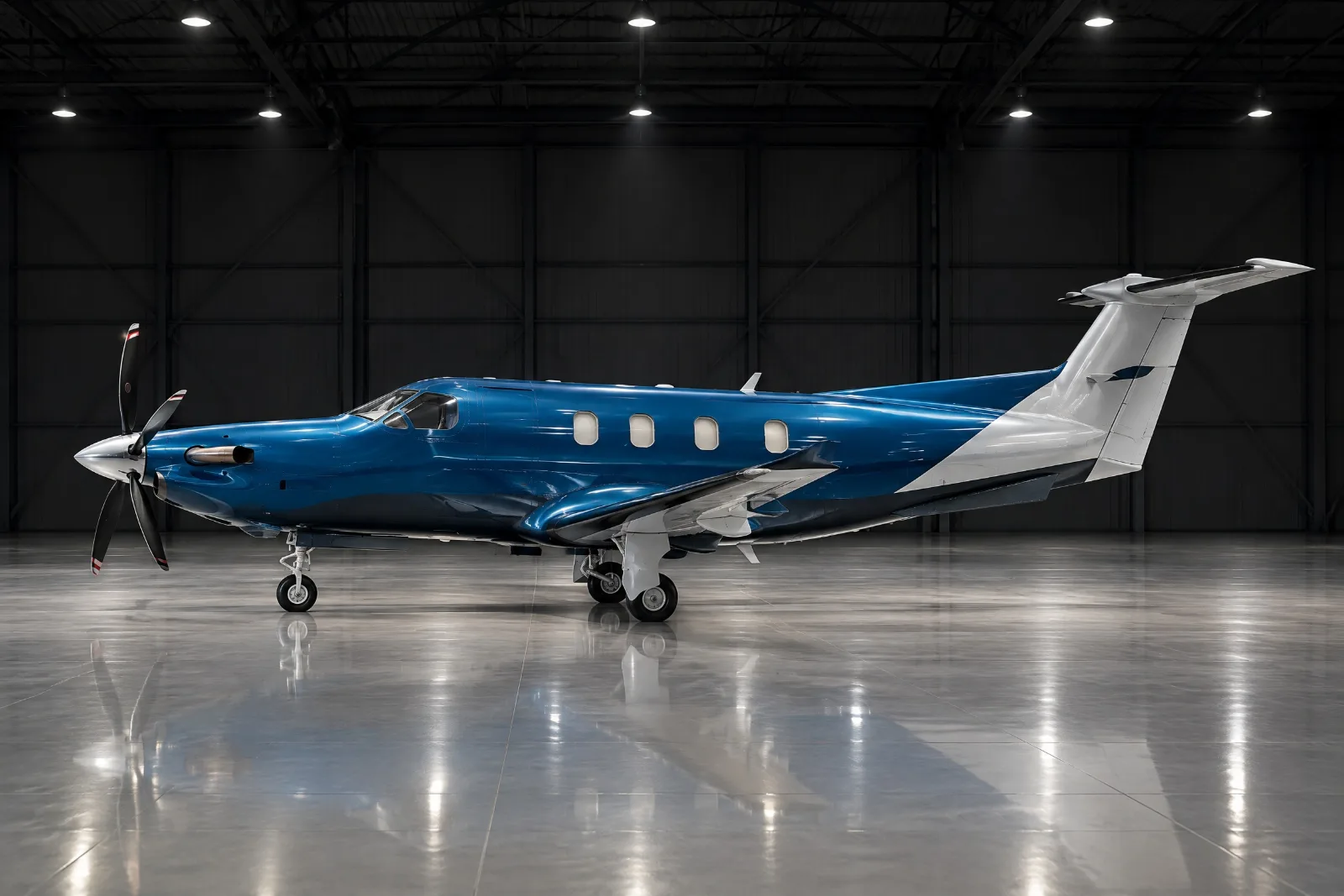
2022 Pilatus PC-12 NGX
- Airframe
- 400 h
- Price
- Enquire
 Representative image
Single-engine turboprop· One in stock now
The PC-12 built the single-engine turboprop category and still leads it: close to 2,000 delivered, a cabin-class interior with a cargo door as standard, and the ability to work from 2,600 ft grass strips in the morning and a capital-city apron the same afternoon. The current NGX brings the electronically-controlled PT6E and an autothrottle.
Range is about 1,800 NM with a 290 kt cruise — flown by one pilot, on one famously reliable engine.
The aircraft
When Pilatus announced the PC-12 in 1989, a pressurised single-engine turboprop carrying passengers over long distances was close to heresy — the market, and most regulators, assumed serious transport meant two engines. The Swiss bet the company on the PT6's reliability record and a simple proposition: one modern turbine burns half the fuel of two and costs half as much to maintain. The prototype flew on 31 May 1991, Swiss certification came in March 1994, and FAA approval followed that July.
The bet paid off completely. The PC-12 created the cabin-class single-turboprop category and has led it ever since — Pilatus delivered the 2,000th aircraft in 2023, with the fleet's accumulated hours running into the millions. Regulators progressively opened commercial single-engine IFR operations to the type, and its operator list tells the story: air ambulance services, government agencies, freight feeders and owner-flyers alike, from the Australian outback to the Rocky Mountains to the charter and safari circuits of Southern and East Africa, where its strip capability and standard cargo door are used exactly as intended.
The design has evolved through three clear generations — legacy, NG and NGX — without ever changing the thesis. The current NGX, with its electronically controlled PT6E-67XP and autothrottle, is the most refined expression of an aircraft that made the single-engine argument so well the rest of the industry eventually copied it.
Key figures
Standard published figures for a typically equipped Pilatus PC-12 NGX. Individual airframes vary with configuration and modification — the specification on a listing is what governs.
Available now
Where it reaches
Click the map to move the origin to your base and see how far the PC-12 NGX reaches at 70, 90 and 100 per cent of published range.
The broker’s view
PC-12 residuals are the envy of the industry — the fleet's safety record and mission flexibility keep demand permanent, and clean examples of every generation sell quickly at strong money. Legacy (pre-NG), NG and NGX form three clear price tiers.
We source the type to order; genuine low-hour examples are won through networks, not listings.
The family
The original series, delivered from 1994 with conventional avionics. The affordable entry to the category; on airframes this age, maintenance history and service-bulletin status matter far more than cosmetics.
From 2005, with increased weights and detail refinements. The pick of the pre-glass aircraft — later airframes with more capability, still at legacy pricing.
The 2008 Next Generation: Honeywell Primus Apex glass cockpit and an uprated PT6A-67P. The largest generation in the used market and the mainstream choice — modern flight deck, proven engine, strong support.
Delivered from 2020: the electronically controlled PT6E-67XP, autothrottle, larger cabin windows and a redesigned interior. The top price tier, and the closest a turboprop cockpit comes to a current-generation jet's.
Common questions
The NGX's published maximum range is about 1,803 NM — six-plus hours, with the type's economics making even short hops sensible.
The PC-12's PT6 has one of the best reliability records in aviation, and the fleet's accident history over millions of hours compares favourably with light twins. Many regulators, including EASA, permit single-engine commercial IFR on the type.
Published performance allows fields around 2,600 ft, paved or unpaved — the combination of cabin and strip capability is the aircraft's whole thesis.
The King Air offers twin-engine redundancy and a slightly faster cruise; the PC-12 counters with a larger cabin, a standard cargo door, shorter strip performance and one engine's worth of fuel and maintenance. Where the mission is African bush-to-city flying, the PC-12's economics usually win the argument.
The NGX replaced the PT6A with the electronically controlled PT6E-67XP — single-lever power with autothrottle available — and added larger windows and a redesigned cabin. The NG remains fully supported and significantly cheaper; the NGX is the choice when budget reaches current-generation systems.
The category's founding argument: one PT6 burns roughly half the fuel of a comparable twin turboprop, insurance and maintenance follow suit, and single-pilot approval trims crew cost. Direct costs per hour undercut every pressurised twin of similar cabin size, which is why fleets standardise on it.
Buying or selling, the conversation costs nothing. Tell us the mission and the budget and we will tell you honestly whether the PC-12 NGX — or something else — is the right airframe for it.
Start the conversation